
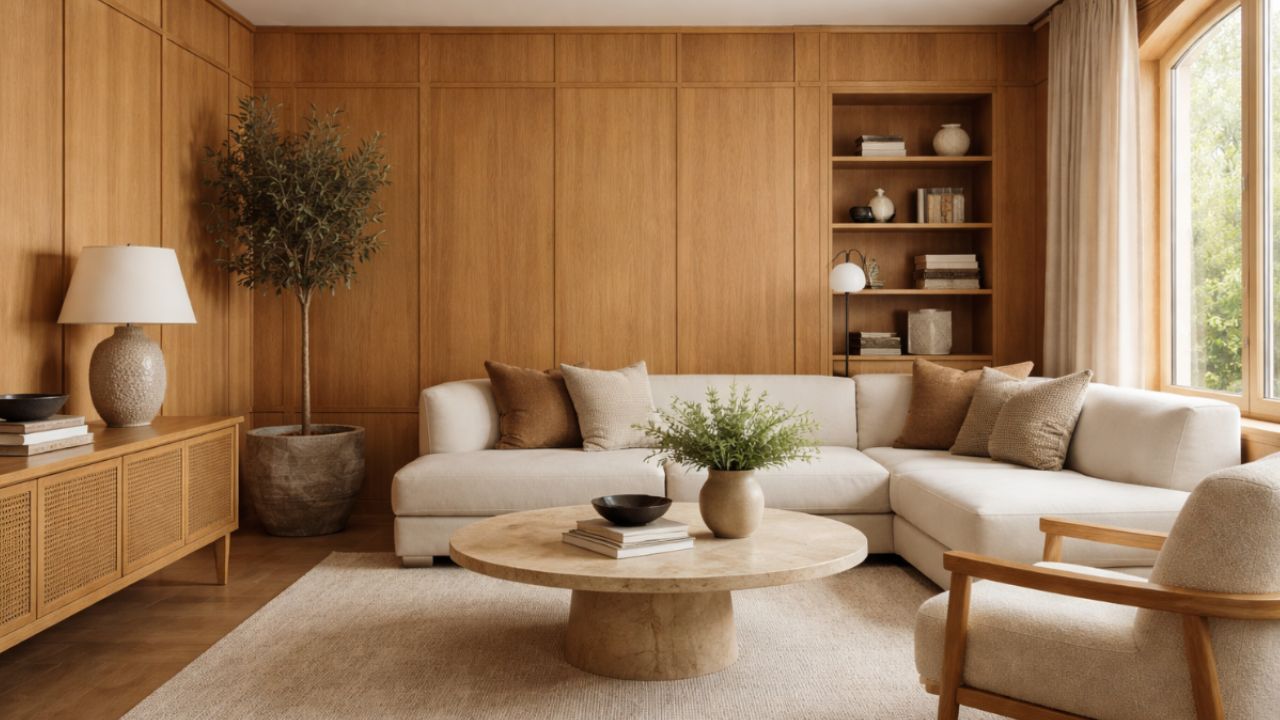
This is not your grandmother’s wood-paneled basement. Believe it or not, this retro wall covering — which may or may not bring to mind questionable design decisions from the 1970s — has been reinvented for today in far more modern and interesting ways.
+ 7 things you should never leave outside during winter, according to an interior designer
And that comes as no surprise: the influence of 1970s design on wall finishes has been gaining momentum in contemporary interiors, now reinterpreted with sophistication and far removed from a dated look.
According to the website Real Simple, designers are embracing wood paneling as a response to visual fatigue caused by overly neutral and impersonal interiors. The trend reflects a growing desire for warmer spaces with texture and identity.
Ellie Hopen, founder and CEO of the architecture and design studio Form Noor, explains that wood paneling is making a comeback for several reasons. “A smooth white drywall wall looks completely unfinished, and I think many buyers and homeowners are starting to agree,” she says. “People crave personality and are tired of low-quality finishes and renovations. Natural materials are timeless, not fleeting, and it’s hard to go wrong with wood paneling.”
According to Hopen, after years dominated by minimalism, homeowners are seeking spaces that convey warmth and a sense of home. “Wood brings a softness and comfort that paint and drywall simply can’t replicate. It ages well alongside the house and its residents.” Today, she notes, there are more options than ever for integrated millwork, architectural details, and custom built-in furniture.
Try it in the bathroom (seriously!)
In a recent renovation of the primary bathroom in her own home — a mid-century modern residence built in 1961 in Los Angeles — Hopen chose to contrast the coolness of white terrazzo flooring with the warm texture of wood. “The grain of the wood and the profile of the panels can do wonders to emphasize the verticality of a space,” she explains. For the project, she selected solid maple panels with a custom finish.
While many people still hesitate to use wood in the bathroom, Hopen emphasizes that with proper ventilation and the right sealants, the material can remain in excellent condition over time.
Don’t overdo the theme
Liz Hoekzema, creative director and co-founder of KLH Homes in Michigan, also advocates for a balanced approach. “The key is not being too literal,” she says. According to the designer, choosing full planks of oak or walnut with consistent grain creates a calmer and more refined visual effect.
She suggests subtle contrasts, such as colorful vintage chairs or furniture in wood tones similar to the panels, which almost “disappear” into the space. “When the panels are already the focal point, the eye doesn’t need to linger on every other element,” she explains.
Choose panels that don’t retain moisture
For Ahmed Harhara, PhD, engineer and founder of HoustonHomeTools.com, the return of wood paneling reflects a renewed appreciation for materials that “breathe” with the home. During inspections, he notes that modern versions are thinner and installed with better spacing for ventilation, avoiding the moisture issues common in older styles.
According to Harhara, many homeowners are opting for lighter woods or engineered panels that balance aesthetics and moisture control — especially important in humid regions. “It’s not just about nostalgia, but about texture and warmth that age gracefully alongside drywall,” he says. When done well, these finishes add personality without compromising maintenance or indoor air quality.
Source: Real Simple. This content was created with the help of AI and reviewed by the editorial team.
